 2026-01-06 05:06:39
 Urban Acrobatics: Mastering the 'Good Luck' Challenge in Skate
The World of Audacious Challenges
The urban playground in Skate offers a vivid blend of adrenaline-fueled adventure and intricate stunt challenges that push players to hone their techniques and find inventive solutions on the fly. The game’s detailed map is filled with opportunities to test your skills in daring tasks that range from effortless flips to seemingly impossible landings. Every challenge is woven into a dynamic environment At the threshold where risk and reward converge as thin as the surface of a rooftop ledge. Players must adapt quickly to ever-changing conditions, using momentum, precise timing, and a deep understanding of the terrain to succeed. This intricate balance between strategy and spontaneity is what makes each venture into the urban sprawl of Skate both unpredictable and deeply engaging.
Navigating the Urban Landscape
In Skate, the Hedgemont district stands out as A neighborhood pulsing with the heartbeat of urban life and the thrill of extreme stunts converge. Its distinctive architecture and varied urban settings provide a perfect backdrop for an array of stunt challenges that are sprinkled throughout. Players can traverse from high-speed junctions to remote corners where the environment becomes a stage for intricate maneuvers. The district features fast travel points that help in quickly tackling challenges once they are uncovered. The fluid design of the game not only makes navigation fun but also introduces an element of strategy: choosing the optimal route and executing precise The maneuvers you execute might ultimately be the deciding factor between failure and success triumph. The Hedgemont layout is a testament to how thoughtful level design can amplify the enjoyment of high-risk, high-reward gameplay.
The Intricacies of the 'Good Luck' Challenge
A defining feature in Skate is the notorious 'Good Luck' challenge, a multifaceted stunt that demands persistence, intuition, and refined execution. This challenge comprises four distinct tasks, each carefully crafted to test the full range of a skater's abilities. The initial tasks range from straightforward maneuvers to more complex jumps that require acute spatial awareness. However, the culminating task—landing inside the notorious Broken Globe—elevates the level of difficulty considerably. This is an undertaking that does more than simply test one's abilities the player’s technical skills but also their patience and adaptability. The layered design of this challenge, where earlier achievements lay the groundwork for later success, creates An expedition that challenges the intellect while equally pushing physical boundaries.
Strategic Milestone Navigation
In the execution of the 'Good Luck' challenge, "a thoughtfully designed plan proves indispensable to" progress through the demanding sequence of tasks. Setting session markers emerges as a critical element, especially when facing the final obstacle. This tactic involves marking critical points on the map after completing each goal, thereby providing both a safety net and a reference point for subsequent attempts. These markers help in restoring progress should an attempt go awry and support continuous improvement in technique. The strategic placement of markers on rooftops and other vantage points enables players to practice from incremental milestones. By breaking down the challenge into manageable segments, the game reinforces the importance of tactical planning, rewarding diligence with a greater chance for success as the player advances through each rigorous segment of the task.
Mastering the Rooftop Dynamics
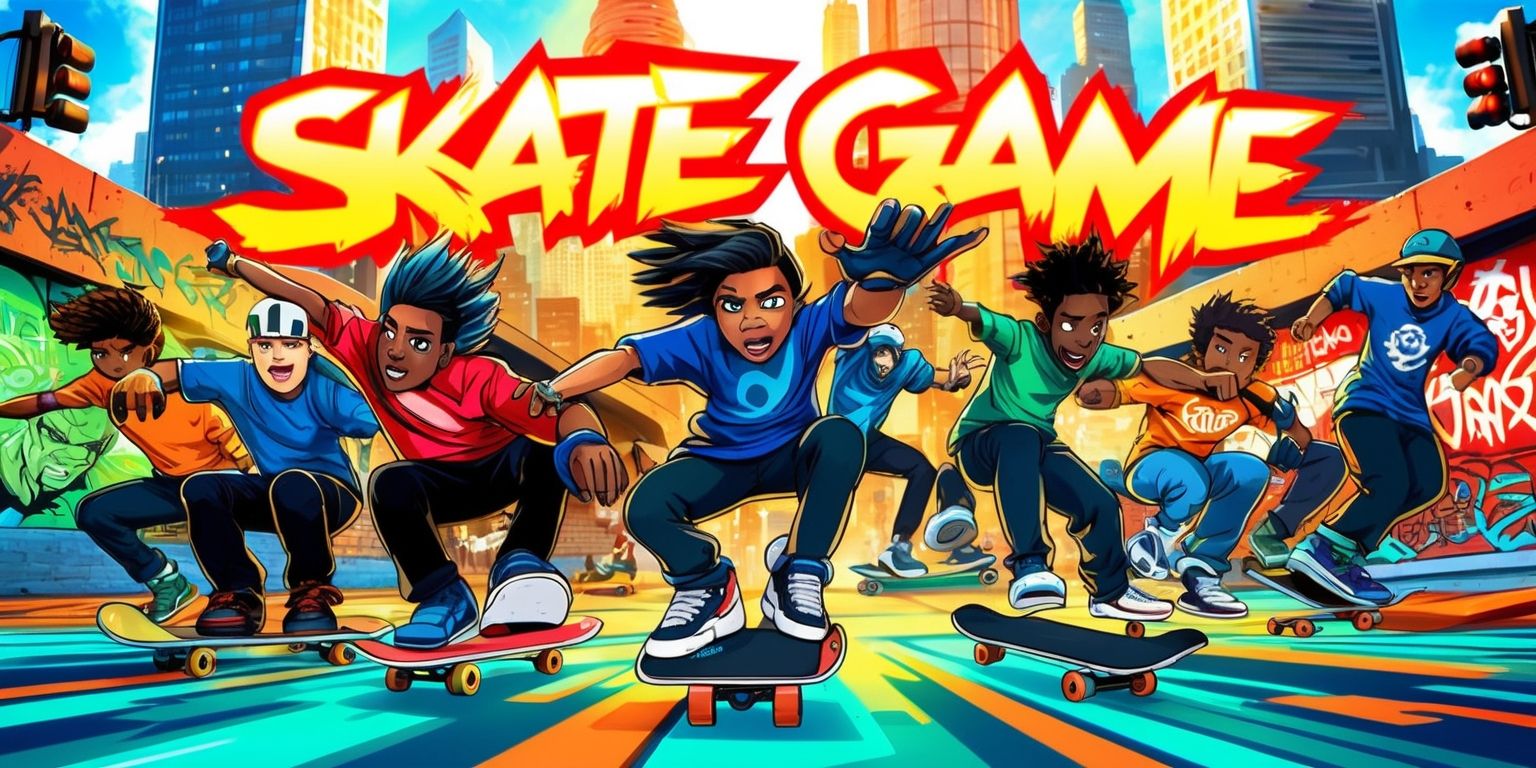
One of the standout aspects in tackling the 'Good Luck' challenge is the use of rooftops as pivotal staging areas for executing complex maneuvers. Aerial stunts in Skate frequently depend on these elevated platforms that allow skaters to gain momentum and assess jump trajectories. In this particular challenge, rooftops serve not only as launching platforms but also as a critical means to control speed and align for precision landings. The game design ingeniously utilizes architectural nuances like curved surfaces and multi-tiered structures, offering rewards for those who can adapt to shifting flight paths. The process of going off one rooftop to engage in precise board maneuvers exemplifies the delicate interplay between gravity and momentum—a dynamic that lies at the heart of the game’s compelling, high-risk stunt sequences.
Curved Surfaces and Tactical Jumps
An essential element of the challenge lies in negotiating the intricate curvature of different surfaces throughout the game. In the approach to landing inside the Broken Globe, players are tasked to carefully manage their trajectory as they navigate the curved rooftop. The design challenges demand a harmonious blend of speed control and calculated board re-engagement. After gaining sufficient momentum from a rooftop jump, the skater is expected to transition fluidly by dismounting from the board to reattach at a critical juncture. This multi-phase action requires both precise timing and spatial coordination, as missing the exact moment can alter the intended landing path dramatically. The curvature of the surfaces is not merely a visual flourish; it plays an integral role in determining how effectively momentum is conserved, making it a salient feature in the successful completion of the stunt.
Harnessing Momentum with Precision
The heart of Skate’s stunt challenges lies in the careful orchestration of momentum and physics. When approaching the crucial task of landing in the Broken Globe, players must first generate sufficient speed from a designated rooftop. This momentum is then meticulously controlled through a series of careful maneuvers that involve unboarding and reboarding with exact timing. The essence of the challenge is to achieve a delicate balance between acceleration and deceleration without compromising control. The game benefits those players who invest the time to fully grasp its underlying mechanics underlying physics by offering a satisfying sense of fluidity as you transition between jumps and aerial glides. Each motion in this sequence is purposeful, demanding a keen awareness of both speed and the environmental layout to ensure that every leap aligns perfectly with the required landing zone.
The Role of Environmental Cues
In Skate, environmental cues are woven seamlessly into the gameplay, guiding players subtly toward success without overt directions. The intricate mapping of the urban setting provides natural markers that assist in navigation, even during high-stakes stunts like the Broken Globe landing. From distinctive rooftops with panoramic views to angled surfaces marked by prominent windows and structural textures, each element of the environment plays a dual role of aesthetic beauty and functional guidance. Identifying the right rooftop with a clear view of the mountains in the background becomes Critical because it functions as the primary point of reference point. This careful incorporation of environmental storytelling not only enhances immersion but provides essential landmarks that are crucial during critical maneuvers, ensuring that players remain oriented even as the challenge intensifies.
Deciphering the Mechanics of Aerial Transition
The aerial transition is an aspect that encapsulates the thrill and unpredictability of Skate. As the player approaches the final task within the 'Good Luck' challenge, the importance of a well-timed jump becomes paramount. The sequence involves skillfully disengaging from the board momentarily to glide through the air, only to reengage at a precise moment that sets the stage for a flawless landing. The mechanics require not just timing, but the ability to adapt on the fly, as every jump may behave differently based on accumulated speed and the chosen angle of descent. The unpredictability of how the character interacts with physical surfaces—often leading to varied bounce dynamics—adds an extra layer of challenge. Mastery of these aerial transitions is key to transforming a simple jump into a beautifully executed stunt that stands as a testament to a player’s finesse and understanding of the underlying game physics.
Altering Course Through Anomalous Trajectories
The experience of descending from the curved rooftop involves harnessing an unconventional approach to trajectory management. At a critical moment, the player must veer left away from familiar markers, such as dumpsters and defined window entry points, to locate the elusive landing zone. This deliberate deviation from traditional paths emphasizes the importance of improvisation and acute spatial awareness. During this phase, the objective is to strike the wall on an angled rooftop that is punctuated by multiple windows. The moment of contact is highly variable, largely influenced by how the character reacts upon impact. By aiming for a roughly mid-point interaction along the wall, players attempt to induce a controlled fall that aligns with the intended target area. This segment of the challenge underscores the need to adapt every maneuver to the immediate feedback provided by the game’s environment.
Refining the Ragdoll Technique
The mechanics of the ragdoll effect in Skate play a pivotal role in creating dynamic outcomes from seemingly simple actions. When the skater collides with the wall at the designated point, the subsequent ragdoll animation can determine the success of the landing in the Broken Globe. This physics-based response "represents a double-edged sword by offering both benefits and obstacles as" it introduces an element of randomness. For some, a perfectly executed mid-wall impact results in an ideal bounce that carries the character directly to the target area; for others, adjustments may be necessary as the automated bounce varies each time. Players are encouraged to experiment with their approach angles, thereby discovering a customized method that accounts for the unpredictability of the ragdoll mechanics while still aiming to hit that ideal halfway mark with fluid precision and confidence.
Charting the Final Path to the Broken Globe
The culmination of all previous tasks in the 'Good Luck' challenge converges on one elusive objective: landing precisely within the confines of the Broken Globe. Once the player has maneuvered through the rigorous steps leading up to this point, the remaining task hinges on pinpoint accuracy and adaptive strategy. From a specific rooftop vantage point, every decision in terms of speed, direction, and moment of re-engaging the board now becomes critical. The approach involves a last-second adjustment—angling the character sideways as they meet the designated wall—to induce a favorable trajectory. Each attempt to hit the marked location can vary, as the necessary contact point may shift slightly owing to changes in the character’s motion dynamics. This stage encapsulates the entire spectrum of challenges present in Skate, melding technique with creative problem-solving in a vivid urban ballet.